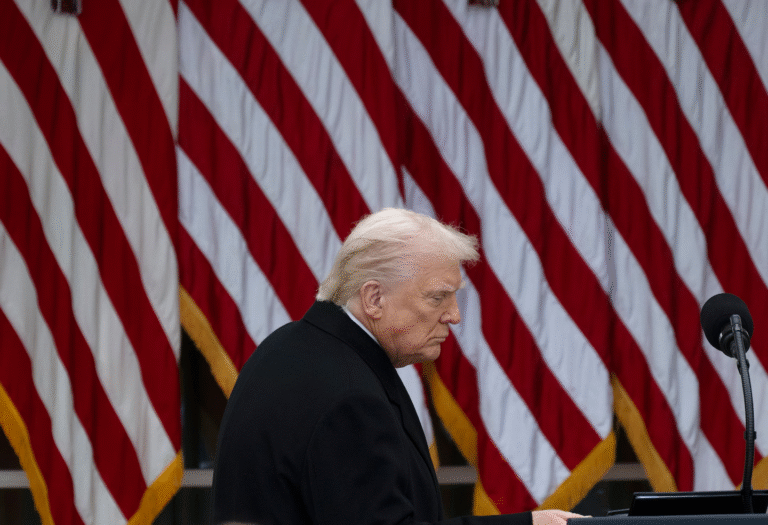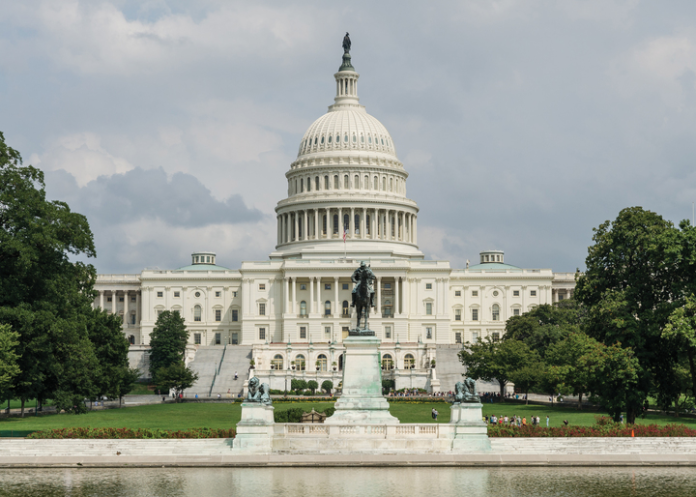
COP30 opens in Belém with the absence of the United States, the world’s second-largest emitter. Ten years after the Paris Agreement, the summit must demonstrate that climate action is no longer solely tied to Washington. Despite this withdrawal, the presence of American governors and mayors in Brazil shows that a portion of the country remains committed to climate action.
COP30: A decisive conference that opens without the United States

COP30, which will begin on November 10, 2025, in Belém, in the Brazilian Amazon, is meant to be the summit where the first significant results are achieved in the fight against climate change. It is unprecedented that there will be no official representation from the United States, the world’s second-largest emitter of greenhouse gases (12% of emissions) and leading oil producer, and this undermines the momentum of negotiations left to other nations.
While, after ten years of the Paris Agreement, the international community must prove that climate cooperation can continue while Washington remains on the sidelines, Simon Stiell, the head of UN Climate Change, insists that “complaining is not a strategy; we need solutions.” The objective, therefore, is to strengthen the collective effort to demonstrate that action can become more effective provided it is more cooperative, especially in times of geopolitical tension.
The United States is not entirely absent: approximately one hundred governors, mayors, and local officials from across the US are participating in Belém, demonstrating that some cities and states are pursuing the ecological transition in their own way. Their mobilization, along with local American mobilizations, shows that the American climate movement exists and is fighting, independently of federal policy.
COP30 highlights a fundamental truth: the global fight against climate change can progress without the United States as the official leader, thanks to the involvement of other countries and local actors within the US.
Why COP30 remains crucial despite the withdrawal of the United States
The absence of the United States at COP30 might give the impression that global climate ambitions are waning. However, this situation creates an unprecedented opportunity: to redefine priorities, broaden alliances, and demonstrate that the fight against climate change can progress without being driven solely by Washington. The conference thus becomes a true test of international governance. While the United States certainly complicates discussions with 12% of global emissions, the remaining 88% rests on other countries, which are taking responsibility for advancing this issue. It is therefore conceivable that the summit marks the beginning of a phase where nations decide to no longer wait for a single country to intervene and spur them on. Emerging countries—in Africa, Latin America, and Southeast Asia—are at the forefront of climate impacts. Their mobilization in Belém demonstrates that the climate issue is no longer merely a matter of diplomatic skill; it is now a matter of life and death. Civil society and NGOs continue to push, as do local US governments that show that action can continue despite federal withdrawals.
Ultimately, COP30 carries strong symbolic significance: proving that multilateral climate action is possible even without the United States. If concrete progress is made, the conference will establish that the fight against climate change is a collective and global responsibility.
The United States was absent… but a local and resilient America was very much present.
The official withdrawal of the United States from COP30 does not mean they are absent from the summit. Around one hundred American governors, mayors, and local officials traveled to the conference to present their climate policies, an alternative form of participation that perfectly embodies the spirit of this year’s event.
For several years, states like California, New York, Washington, and Colorado have successfully developed ambitious environmental policies, often significantly more sophisticated than those of the federal government, and have sought to demonstrate at COP30 an America committed to climate action that is not dependent on Washington. The rallying cry is, in effect, “We Are Still In.”
This highlights the complexity of the American political system where, despite the federal withdrawal, states and cities can still regulate greenhouse gas emissions, sustainable mobility, forest protection, and green energy, with some even having signed bilateral agreements with cities in Europe and Asia.
COP30 reveals that climate action can proceed even without the United States. While the White House is absent, the participation of governors and municipalities demonstrates a commitment from a segment of the American population. But this summit primarily serves as a reminder that the rest of the world—those responsible for 88% of global emissions—must strive to cooperate and advance climate action.
About The Author