A new media bias tracker has appeared on the White House website. It shows a public “Hall of Shame” targeting news stories the president says are unfair. The launch comes right after Donald Trump made sharp personal attacks against several female reporters from ABC, CBS, The New York Times, and Bloomberg. Many people now wonder why this tool was created, how it will be used, and what it means for the press.
How the media bias tracker works inside the White House
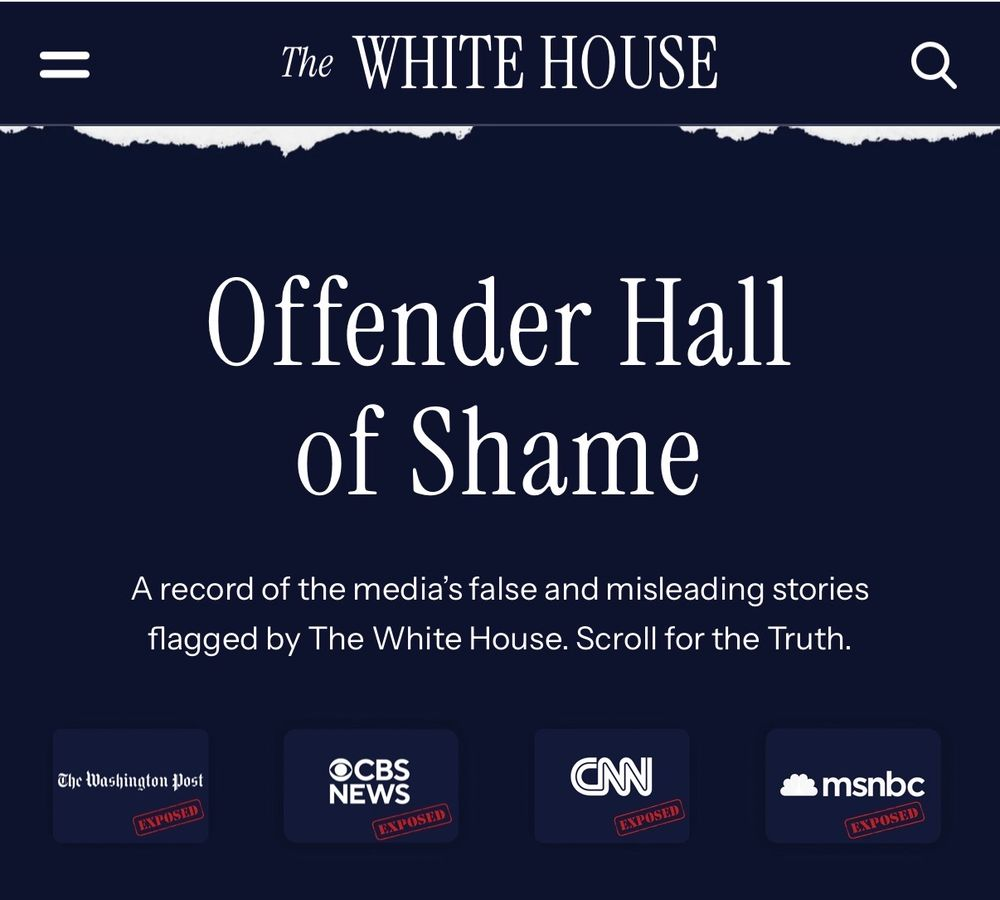
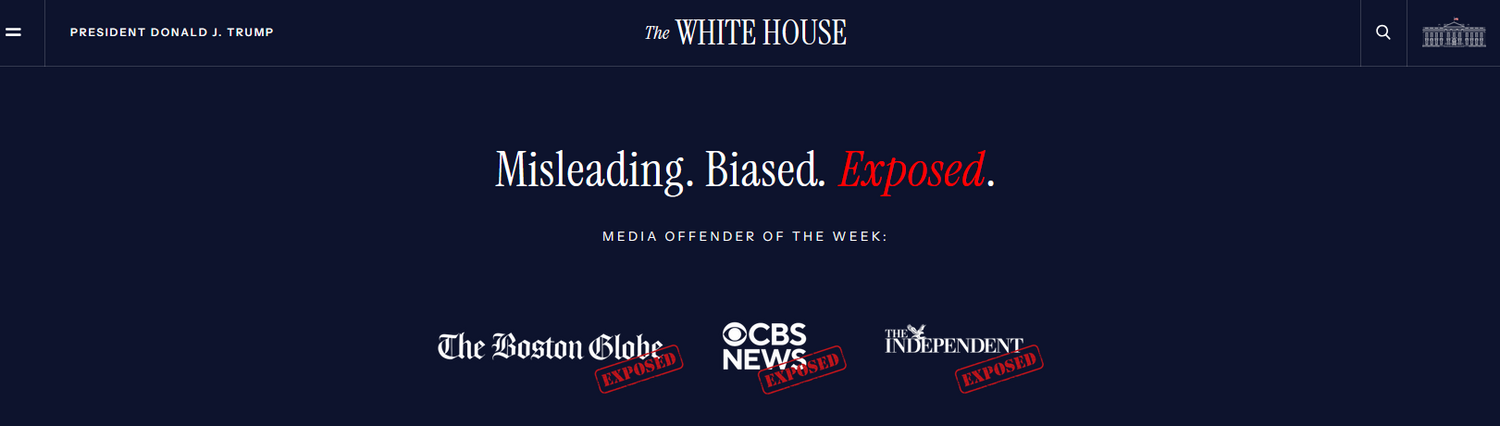
The new media bias tracker is a webpage created to collect news stories that the White House says are wrong or unfair. The page is simple. It lists the titles of articles, the names of the reporters, and the parts the president disagrees with. It also explains why the White House believes each story shows “bias,” a word that means the story leans in one direction instead of staying neutral. The White House calls this part of its effort to fight “false news.” However, many people see it as a way to shame journalists. The page looks like a public scoreboard.
If the president dislikes a story, it can quickly appear on the list, and millions of people can see it. Because of that, the media bias tracker feels different from past complaints. Presidents often disagree with reporters. But posting their names on an official website is new. It makes the disagreement feel bigger and more public. It also makes the conflict easier to spread through social media, because people can share the link very fast.
Another unusual part of the tool is the name “Hall of Shame.” This expression is usually used for serious mistakes. But here, it is used for news reports the president simply disagrees with. As a result, some watchers say the list mixes true errors with normal criticism, which may confuse readers. Still, the White House says the goal is simple: show the public which stories they believe twist facts. Whether that is helpful or harmful depends on who you ask.
Why Trump launched the media bias tracker after attacking reporters
The media bias tracker did not appear out of nowhere. It was posted shortly after President Trump publicly attacked several female reporters from ABC, CBS, The New York Times, and Bloomberg. He said their questions were “nasty,” “wrong,” or “dishonest.” He also suggested that some of them were trying to embarrass him. Because of these comments, people were already discussing how Trump treats the press. Then, the new White House page appeared. So, many observers think the timing is not a coincidence. Instead, they believe the tracker is part of a larger plan to push back harder against news coverage the president does not like.
In addition, Trump has a long history of criticizing journalists. But this time, the conflict feels more official. It is no longer only in speeches or on social media. Now it is posted on a government website. This makes the situation feel more serious to many reporters. Some experts also worry about gender. Because the recent targets were female reporters, critics fear this could discourage women from asking strong questions. Yet the White House denies this and says the president simply defends himself when he feels a report is unfair.
How this new tool changes the relationship between government and news
The relationship between presidents and reporters is always complex. There are arguments, disagreements and tough questions. But the media bias tracker adds a new tension. For example, reporters might now worry that a simple mistake could land their story on the “Hall of Shame” list. This could make some journalists hesitate before publishing important information. It could also discourage them from challenging powerful people, because they fear public punishment.However, some people support the tracker. They say it helps show readers when a story is inaccurate. They believe it pushes journalists to work more carefully.
And they argue that transparency is good for everyone. But others strongly disagree. They say that pointing fingers in this way is not the same as offering corrections with facts. Instead, they believe the page acts like a warning sign meant to scare journalists. Another concern is the power of government. When the White House labels stories as “shameful,” it may look like the government is judging which news is allowed or respected. For a country built on free speech, this makes many people uneasy. Still, the debate continues. And as long as the media bias tracker stays online, it will remain a major part of the conversation about press freedom.
What the media bias tracker could mean for the future of journalism
Looking ahead, the media bias tracker might change daily news work. Reporters might double-check every detail more than ever. Editors may add extra steps to review stories. Newsrooms could become more careful with wording and sources because they know the White House is watching closely. On the other hand, the tracker might inspire some reporters to push back more strongly. Instead of becoming quieter, they might investigate harder. They might publish deeper stories. They might fight even more to protect press independence.
There is also a chance the tracker will affect public opinion. Some people might trust the news less. Others might trust it more. It depends on how the public feels about the White House’s role in judging the press. In any case, the future will likely bring more debates about truth, fairness, and political pressure. And because the tracker is new, no one knows yet how big its impact will be. But one thing is clear: it has already changed how the press and the presidency face each other.
The media bias tracker marks a new step in the clash between the White House and the press. It adds force to the president’s attacks and places reporters under brighter public pressure. Some see it as useful. Others see it as dangerous. But everyone agrees on one thing: it will shape how the news and the government interact in the months ahead.
About The Author