
British Defence Secretary John Healey issued a warning on 19 November 2025 regarding the presence of the Russian Spy Ship Yantar in the vicinity of UK territorial waters. He stated that this ship reportedly pointed lasers towards Royal Air Force (RAF) aircraft and described this action as “deeply concerning”, which increases existing tensions between London & Moscow due in part to fears for important underwater infrastructure.
The Yantar: a spy ship at the heart of growing maritime tensions
The Yantar is considered as an Oceanographic Research Vessel by various authorities in the UK, but according to the UK Authorities, this is by design and the Yantar’s capabilities and usage extend beyond what it was designed for. London claims that the Yantar is owned by a Russian Agency that focuses on deep sea research, thus London believes the Yantar’s true function is to remove and map critical undersea infrastructure. The Yantar has previously been seen in UK waters this year, having first approached and entered the UK’s Exclusive Economic Zone very near to the Scottish Coast, prompting the attentiveness of the Royal Navy toward the activity of the Yantar.
The primary issue is related to vital undersea cables and pipeline infrastructure that provide internet connectivity, enable telecom transfers, and supply power to entire regions. The fact that a ship such as Yantar has the capability to conduct mapping and surveillance of these infrastructures raises concerns about the potential for future sabotage during periods of heightened tensions. The continuation of these types of surveillance by a foreign flagged vessel, according to London, represents a form of hybrid warfare tactic.
Laser incidents: a dangerous escalation over UK waters
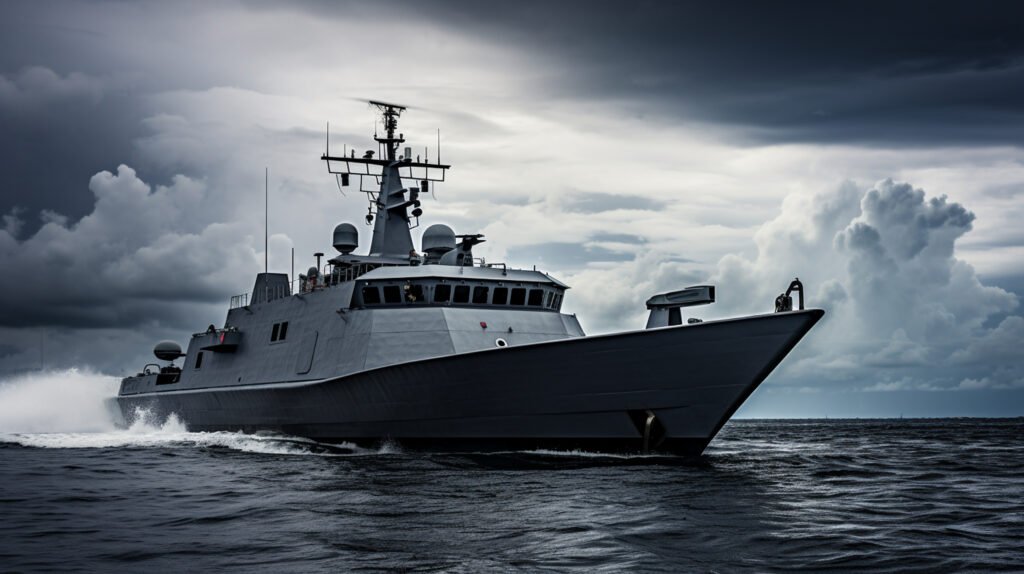
The RAF’s P-8 pilots conducting surveillance missions have stated that they have been illuminated with lasers from the Yantar while in operation. Defence Secretary Healey has publicly decried this act as dangerous. Laser beams can be used to disorient or create temporary blindness in pilots, representing a significant risk to their vision while flying, as well as damaging optical equipment. The UK believes that the use of this technique indicates that Russia is attempting to escalate the level of tension associated with maritime confrontations.
As a counter-action, the UK dispatched a Royal Navy frigate and Royal Air Force (RAF) Aviation Patrol Aircraft to track and keep under surveillance its Yantar vessel. Furthermore, the Royal Navy changed its rules of engagement so that they could follow it more closely. Healey indicated that should the Yantar change trajectory or increase tension, the United Kingdom has already prepared “military responses”.
Strategic context: undersea infrastructure, hybrid threats and modern maritime security
The incident listed above is not an individual case but rather indicative of a larger movement of Russian naval forces around the British and NATO maritime areas. The Russian vessel named Yantar has been stated by London to be part of a fleet whose mission is to collect intelligence during peaceful times and support possible acts of sabotage if a conventional conflict were to escalate.
The security of the undersea cables and pipelines that carry most of the world’s communication including commercial and government transactions, and banking, has become one of the top security challenges of our time. Disruption or mapping of these lines could have significant repercussions for government and military operations, and for many sectors of the economy.
In addition, the United Kingdom has begun to raise its maritime surveillance capability and enhance defence investment while increasing cooperation with our allied partners to increase our ability to detect and assess vulnerabilities below the waves. According to Mr Healey, this is an example of a larger trend in which nations around the world are re-thinking defence strategy and taking a more “hard-line” approach to counter the hybrid types of threats posed by cyber, undersea and conventional military forces.
About The Author